
Beltane Interlude: A Sacred Path
A morning walk photo essay

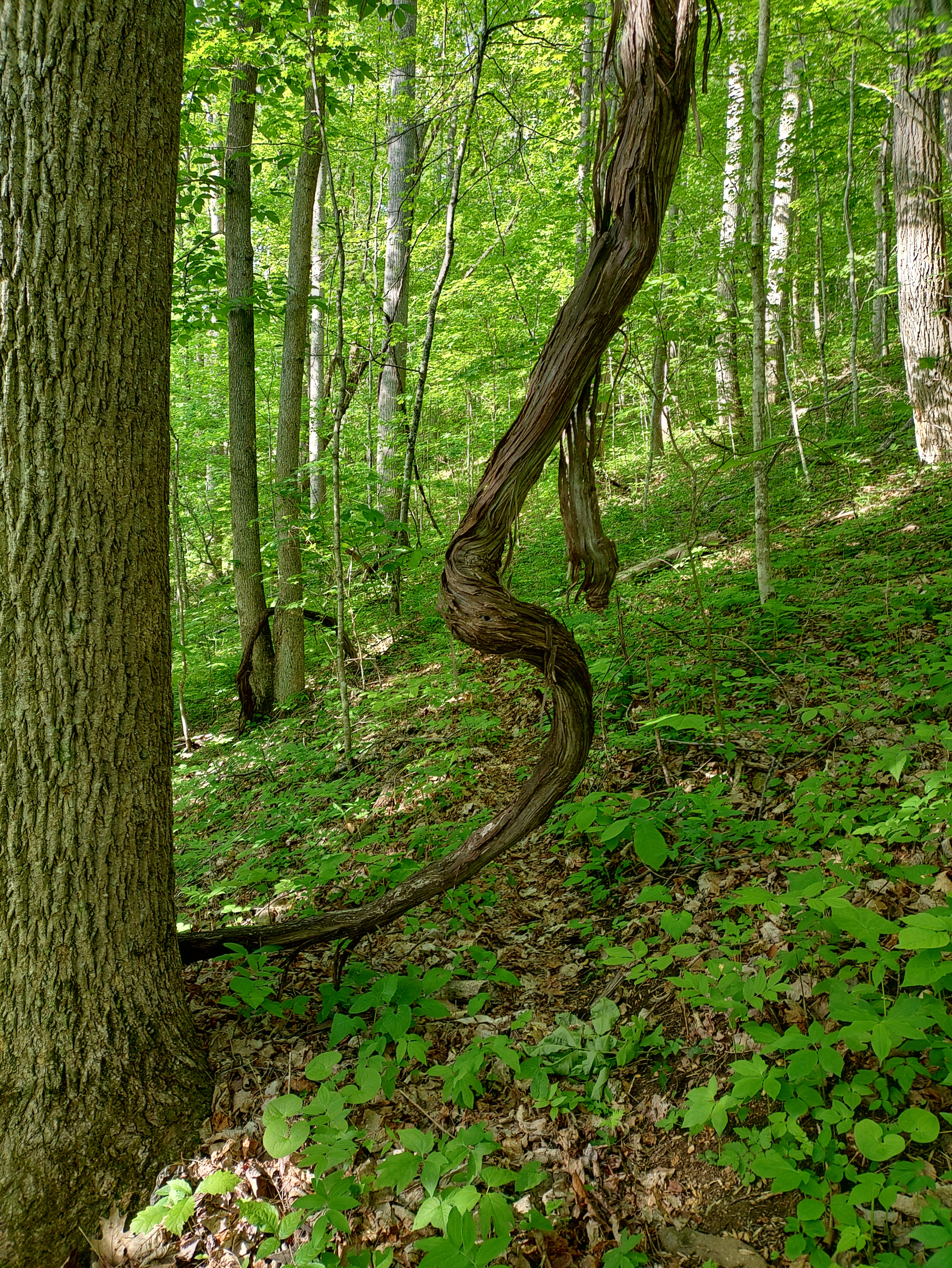
(This post has a lot of photos and will probably not be complete in your email inbox. Please click through to read it in your browser or on the Substack app.)
Although it is usually celebrated on May 1, today is astronomical and astrological Beltane: half way between the spring equinox and the summer solstice. The inflection point in the wheel of the year when the upswing begins to transition into the fullness of summer, when the rapid lengthening of days becomes more subtle as we move toward the solstice still point.
I had something else in mind for this space, but it can wait for the 21st. Today I would like to bring you along on a path I have discerned and created at my new home. A loop that has become the start to nearly all of my mornings. I have a vision to ultimately create signs and meditative prompts along the way, but - lacking a sign budget at the moment - I’ll share some of those here.
I did have a forest path at one of my Corvallis homes, but this feels like the first time in my adult life that I have something like my walk in the valley at my childhood home - a long immersive wander through rocks and creeks and enchanted places.
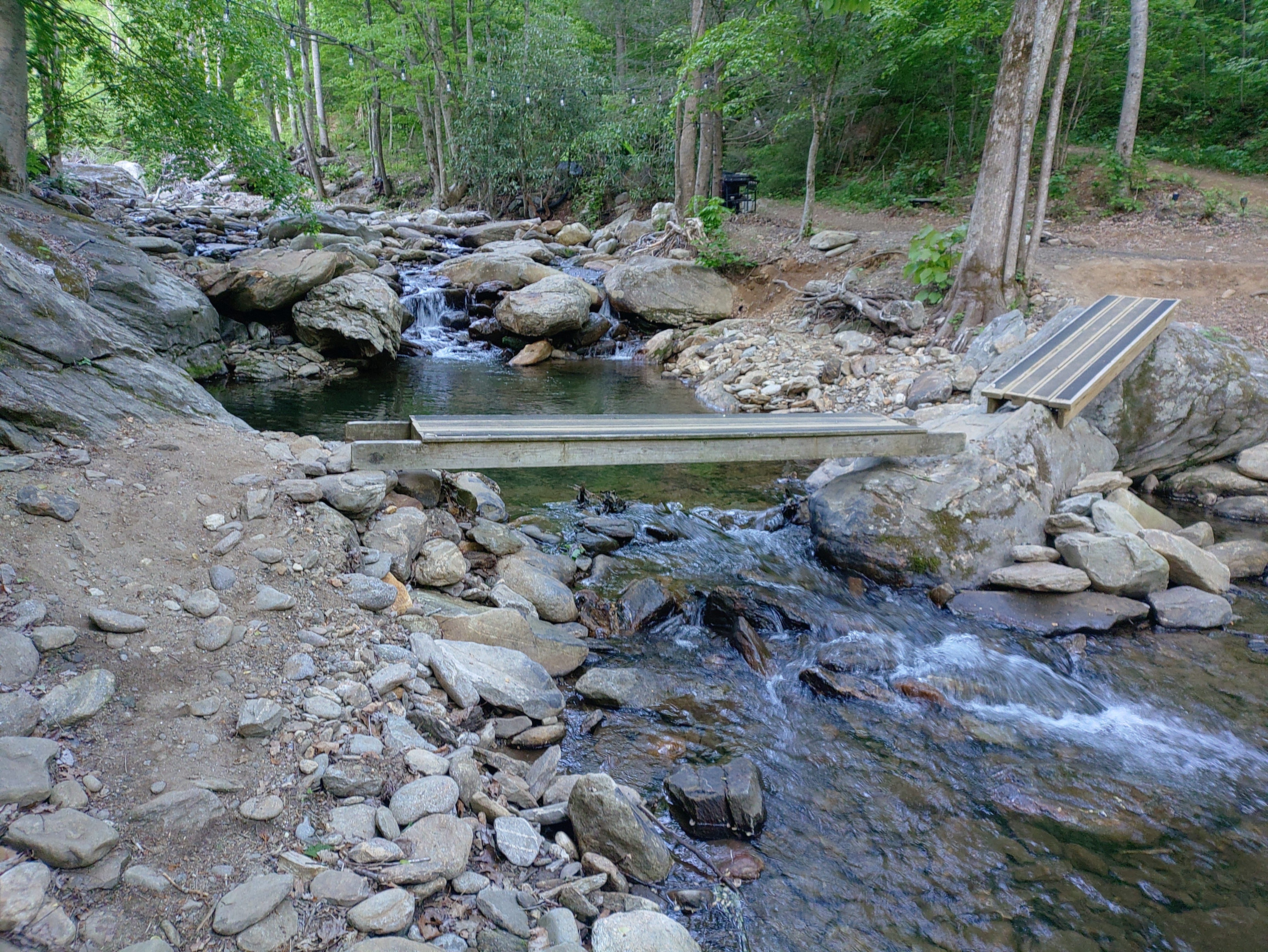
The loop begins at the footbridges over Mineral Creek - vastly reshaped by the hurricane floods of 2024. It can then proceed either direction, but for today I will go counter-clockwise. It follows the main Mandala Springs road/path - or any of the smaller existing trails on the property - up to “Ceremonial Flats” where it branches off.
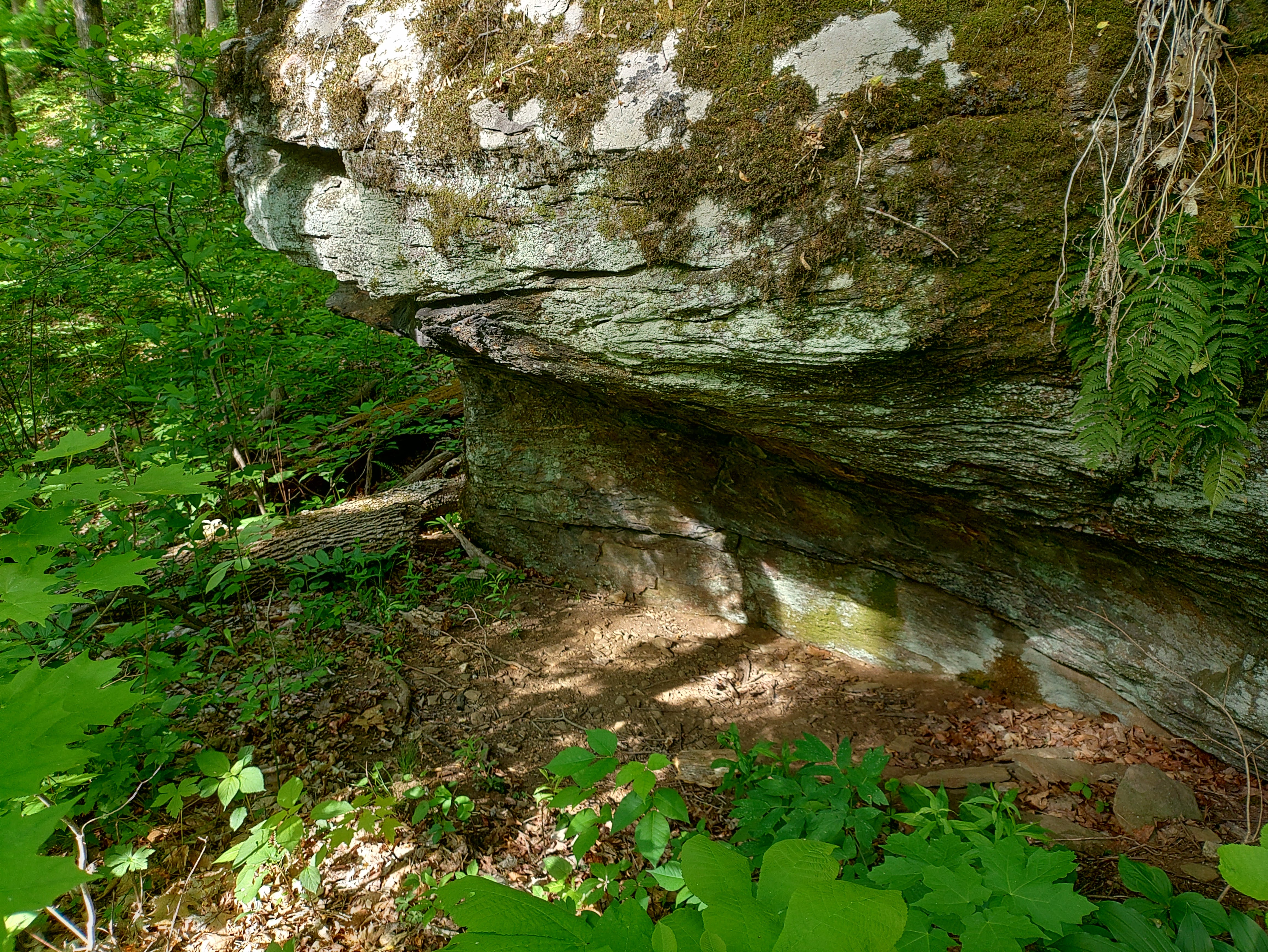
The path switchbacks past giant boulders and great trees, through an understory of trilliums and wild ginger and soon-to-bloom lilies, climbing to around 500 feet above the creek when it reaches what I call the north gate.
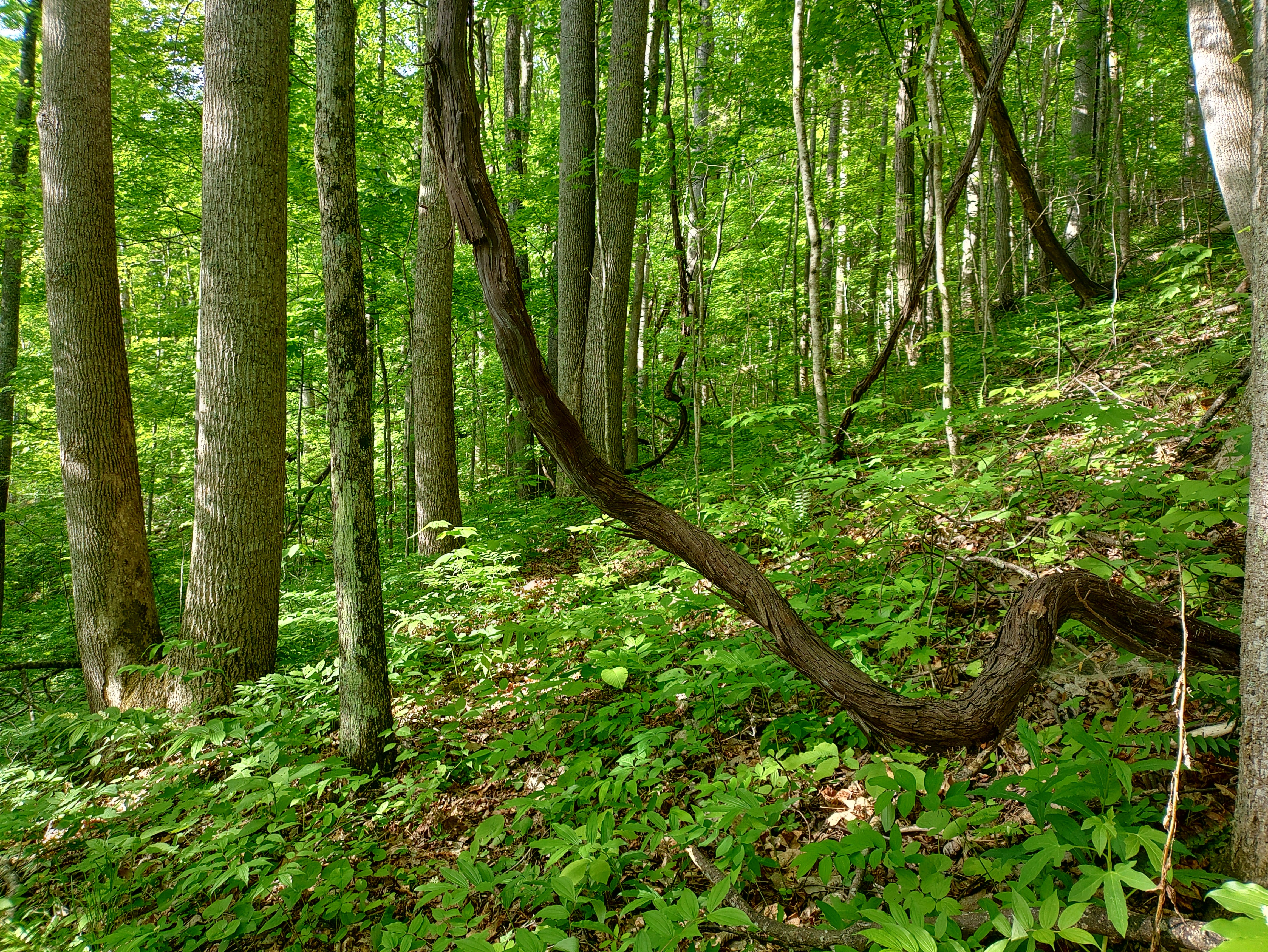
Physically, the north gate is a pair of mirrored vines, both with the same S-curve and both directly in the path. The larger one, in the background here and in the photo at the top, climbs a pair of twinned trees.
Energetically, it is a shift from rich Appalachian forest beauty to something that feels - well - different. A realm within a realm. A place where I could sit all day, listening to the birds and feeling my own roots grow. It feels a bit like stepping across the threshold into a cathedral, but a cathedral that has grown in place, shaped by Earth consciousness across deep time.
Beyond the gate I don’t feel like using power tools. And I feel inclined to speak in whispers. And I am even somewhat hesitant to make this path known at all. But I feel that it is time for others to find, and to begin to feel, these places. For us to stop hiking and to start visiting, wandering, belonging.
Shortly past the gate is a truly magical place. A spring at the base of an overhanging cliff, with wild orchids at the drip edge and massive trees growing at crossing angles below. Tucked into the overhanging cliff is a Phoebe nest, and it seems they have grown accustomed to my daily passage.
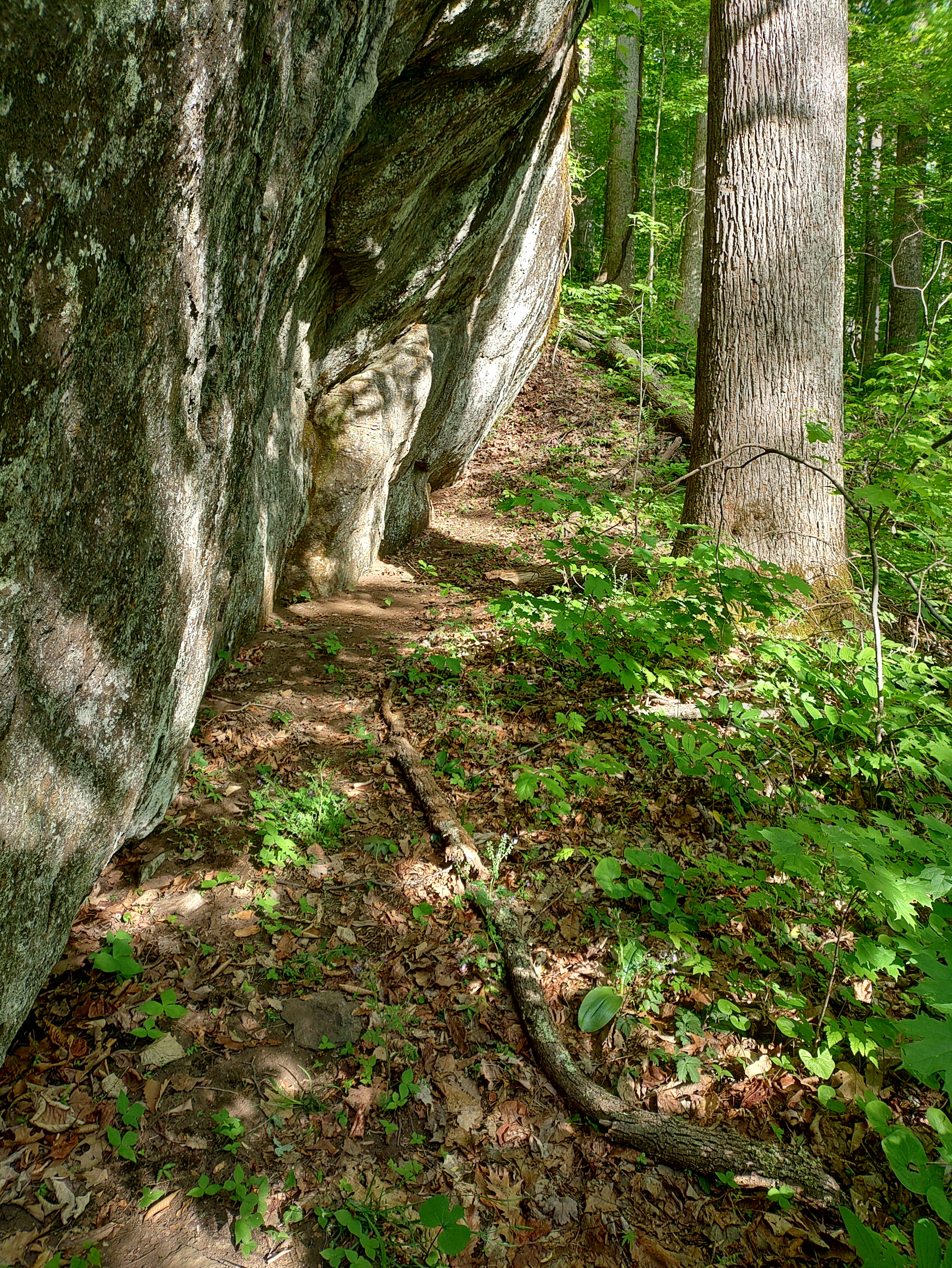
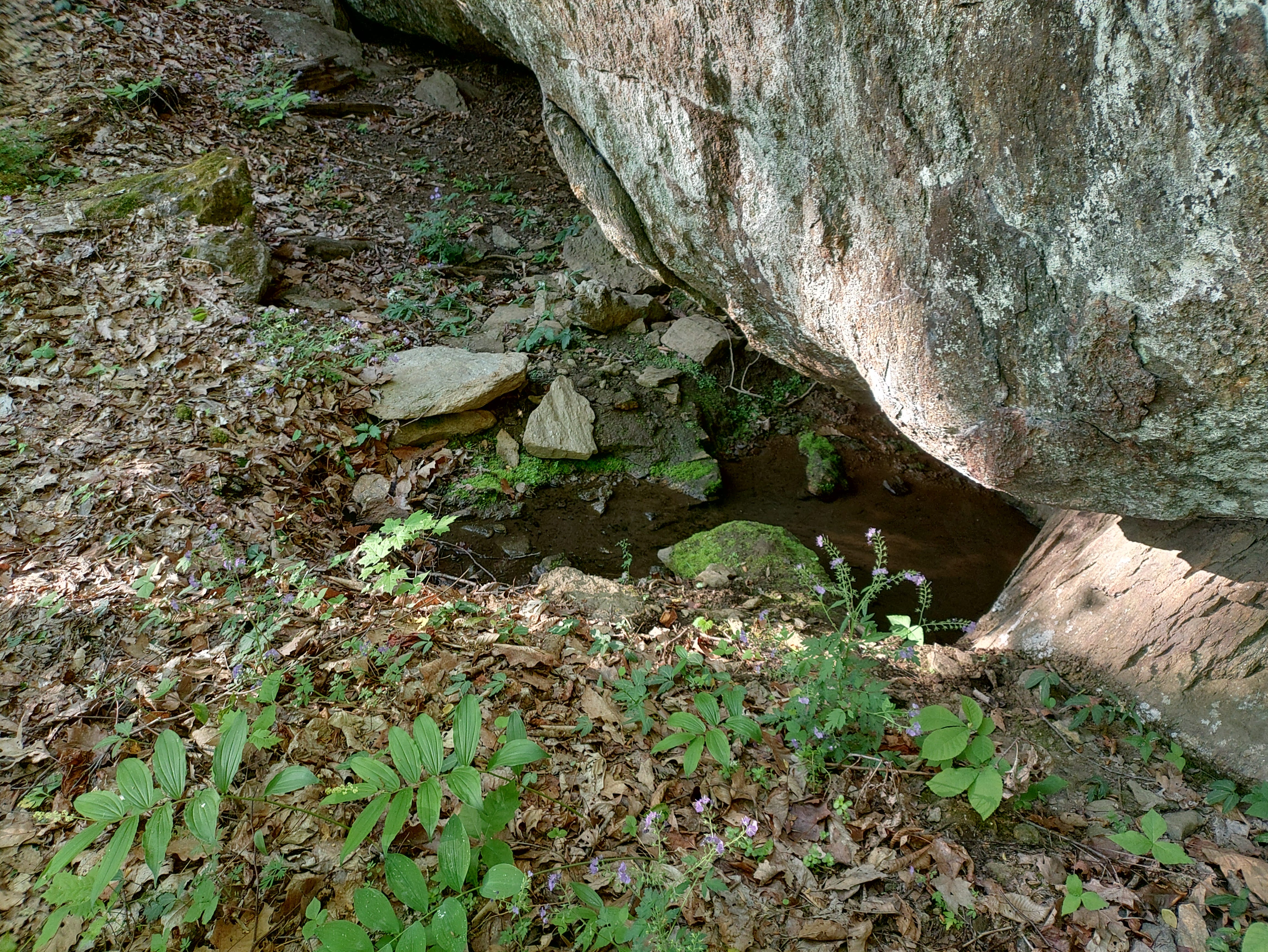
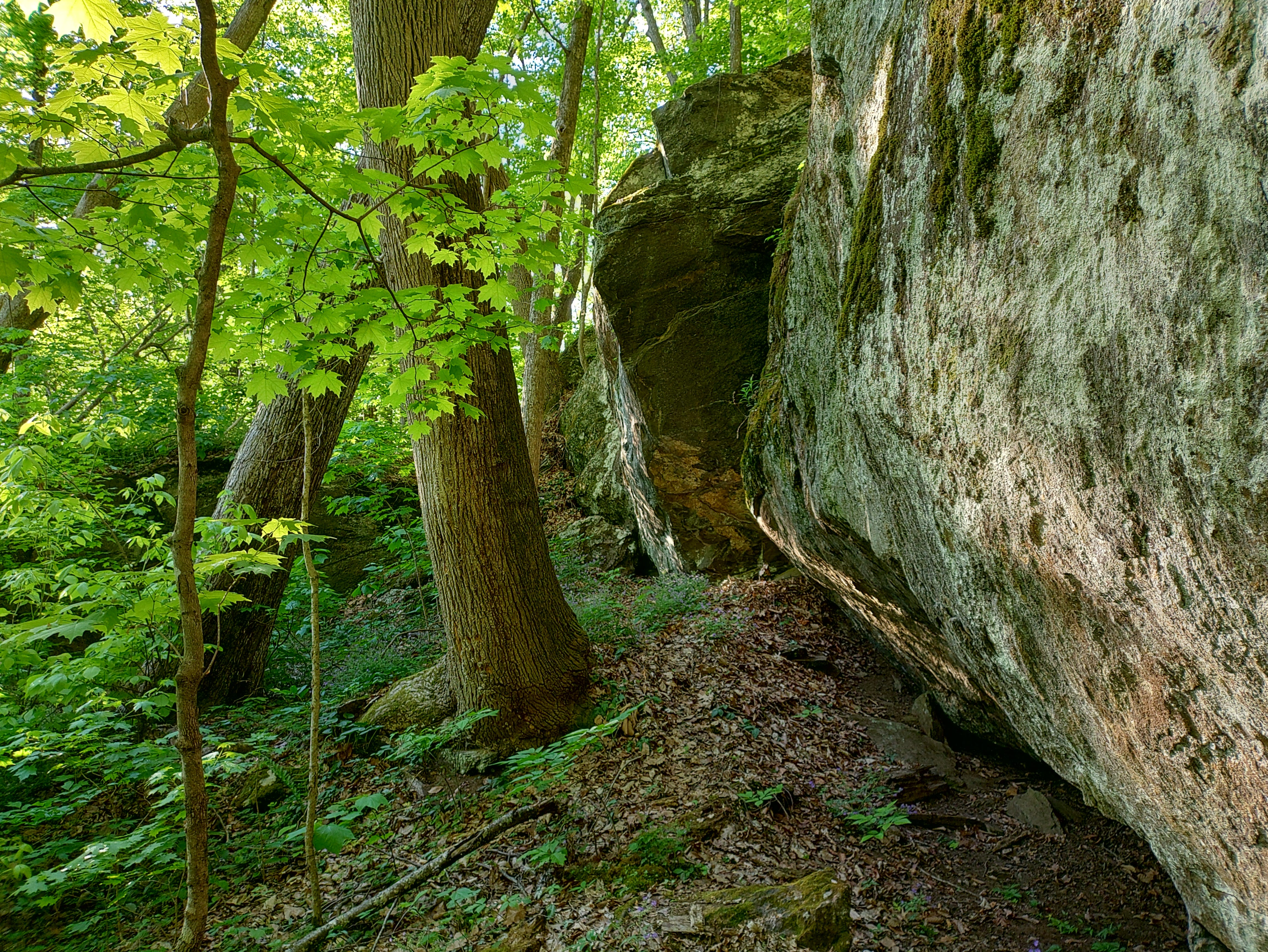
Somehow I found this place in my first half hour of wandering, on my first visit to Mandala Springs back in early February, even though I had no path or instruction, and I was simply following my intuition. It is probably safe to say that I live here because of this place. I might still have ended up here otherwise, but this is the yes that remained even as the housing options on offer felt more like no or maybe.
Ancient Mountains
One billion years ago, a thousand thousand thousand times around the Sun, these rocks formed among the roots of high, jagged mountains that resembled the Rockies or the Alps: the result of two of Earth’s plates colliding. They have been unchanged since that time, waiting for wind and water to remove the thousands of feet of rock above them, to reveal their innate regions of strength and softness as cliffs and outcrops.
Resting our bodies against this stone, we are in contact with a time long before the dinosaurs, before plants, before life on land. A time when tiny creatures in the oceans were just discovering the art of collaborating, becoming multicellular.
At the deepest quantum level, our bodies and these mountains are much the same. Atoms of oxygen, magnesium, iron, potassium holding their form since being born in the hearts of stars. What wisdom is held when they dance so slowly? Can we allow ourselves to feel held within the Earth, by something far deeper and more solid than our ideas and institutions?
Out of respect for the Phoebes, I seldom linger here long, and nature has created a beautiful path - a series of gentle steps - up to the top of the cliffs, past some wild rock formations. Here is where I often first hear the song of the Cerulean Warbler - a bird that I have long loved from afar but never before encountered. Their presence here - along with Yellow-throated Vireos and Scarlet Tanagers and many others - marks this as mature, intact forest. A rare habitat, and another reason to keep this path small, to speak softly, to walk with reverence.
At the highest point of the path I have started to create a little altar space. As I was taking this photo yesterday morning two Ovenbirds zipped by - perhaps in a lively quarrel over nesting grounds - and today I found myself being investigated by a female Black-and-White Warbler, flitting in to perhaps six feet away to see who this two-legged wanderer might be.
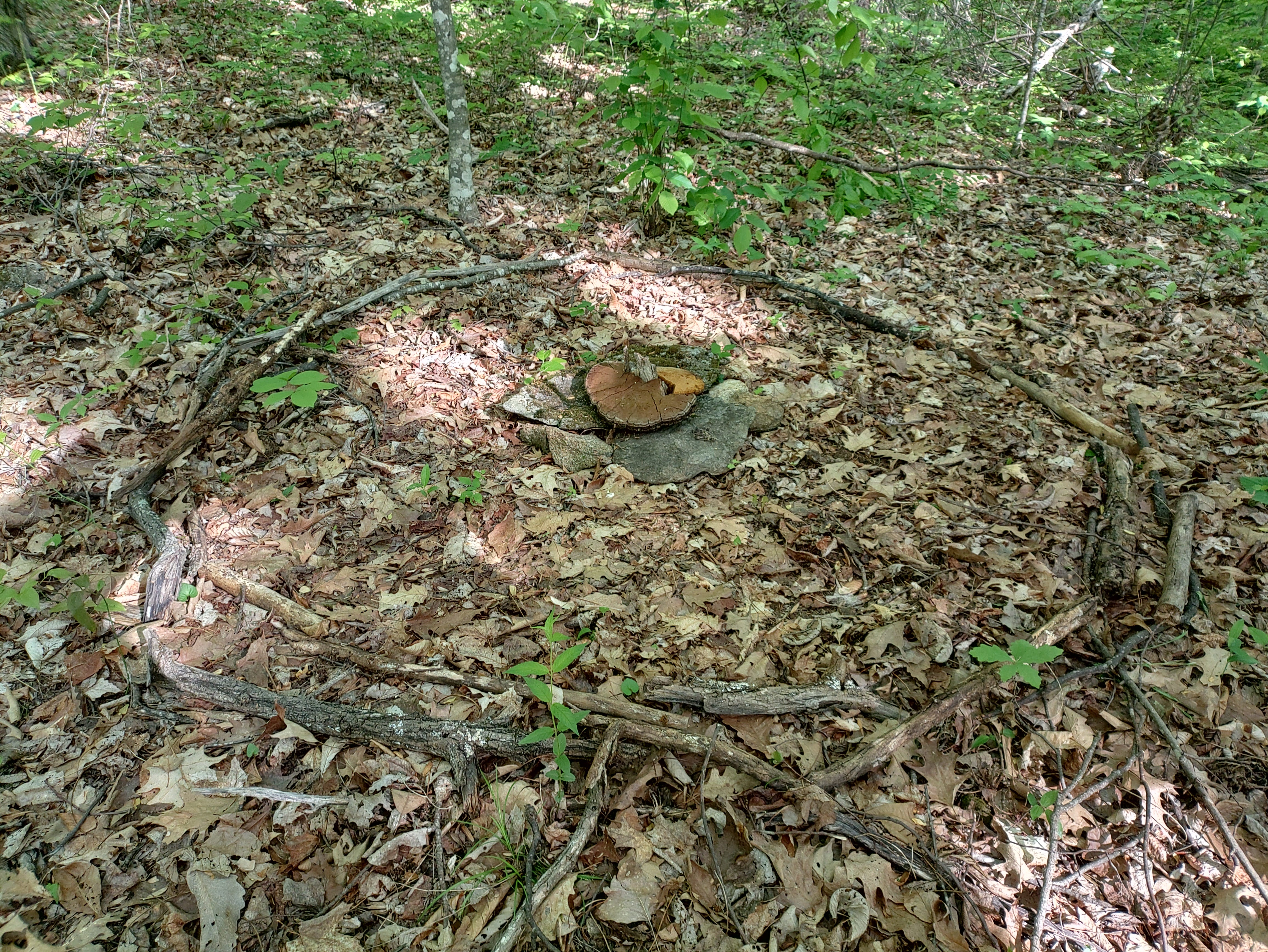
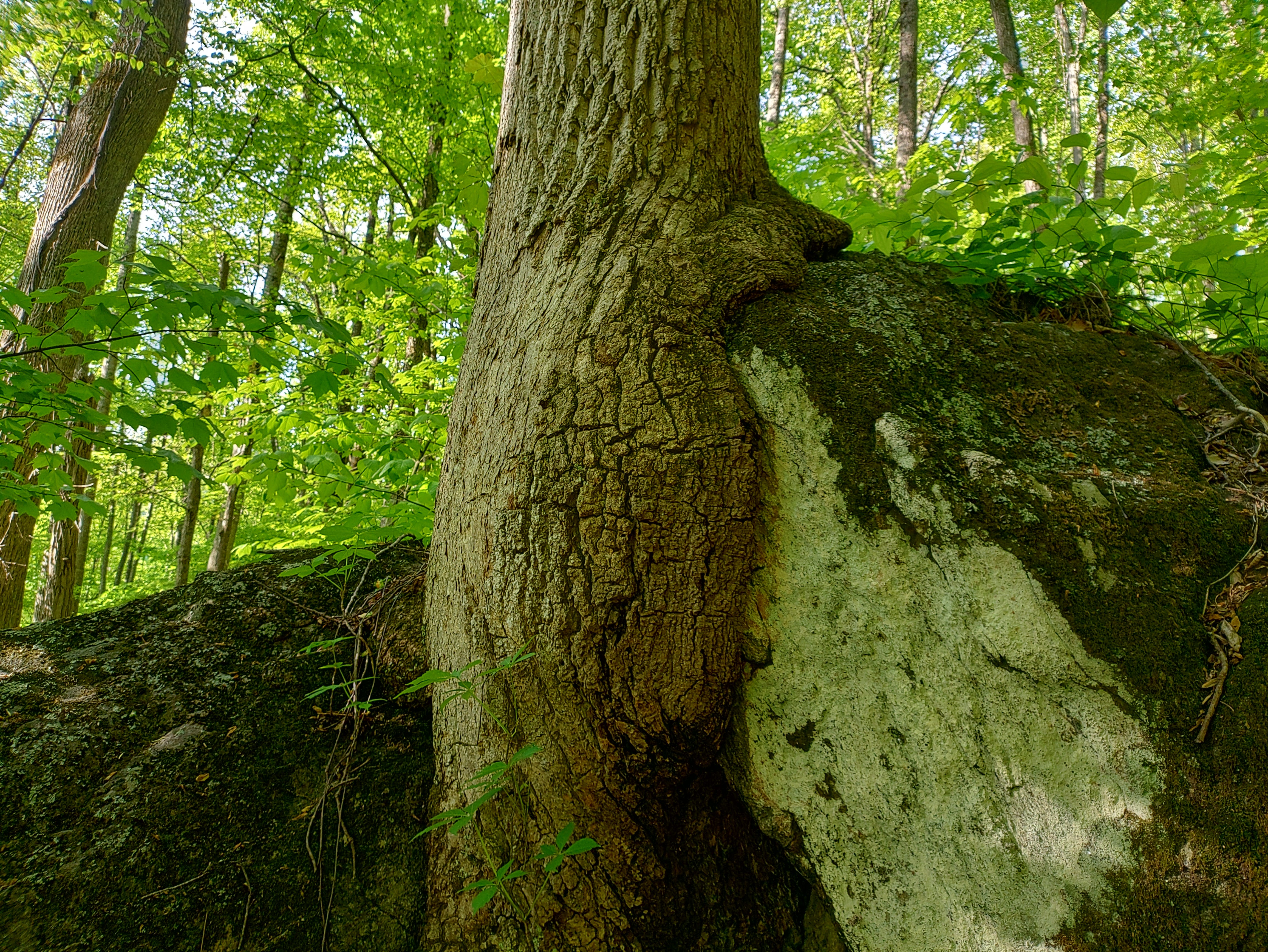
From this point the path switchbacks down to another line of cliffs, passing a tree growing right out of the rock. There are many such embraces in these mountains, but this one seems especially loving - a sort of arboreal bear hug.
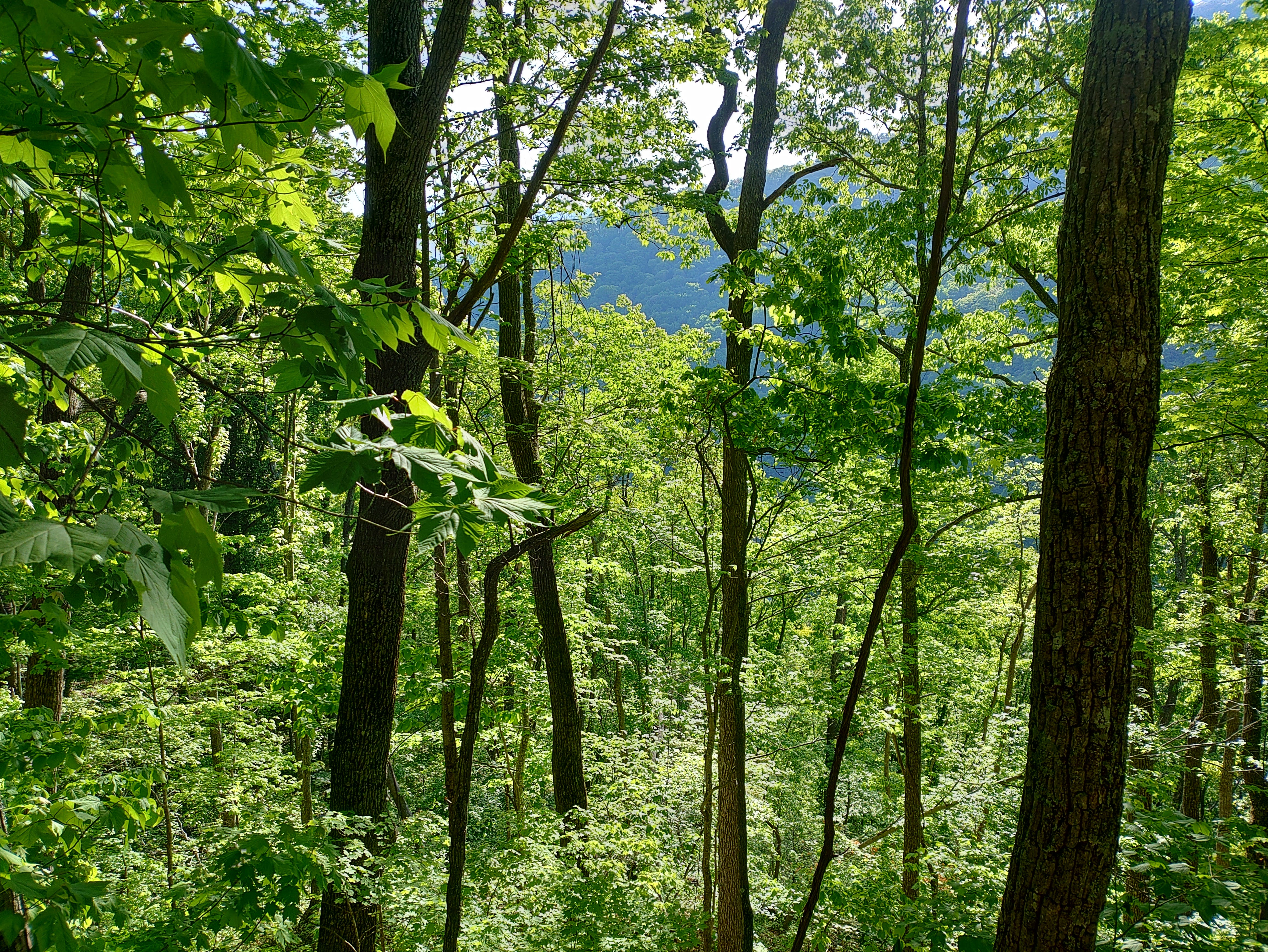
The top of the next cliff band is a great place to sit on the stone and gaze out - rather than up - at the warblers in the canopy, and most mornings I pause here for a long while, sipping my coffee and watching the sun rise above the ridge to the east.
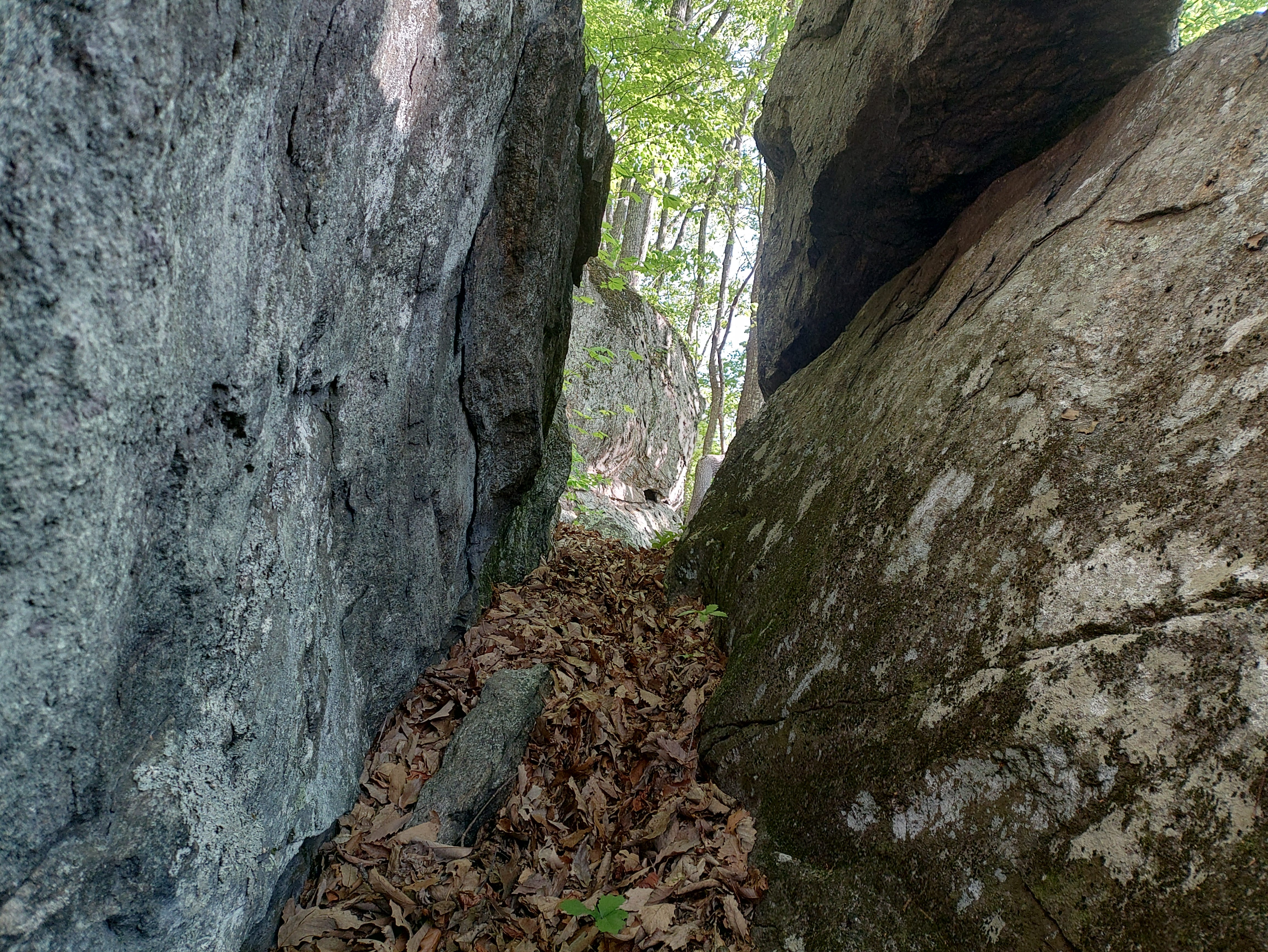
The path then follows another natural series of steps and ledges down the cliff face and - like some of my favorite childhood trails - finds its way directly through the rock.
A Longer View
How long did it take for this crack to form, to open, to fill with soil?
If we go back a hundred years, even a thousand, very little would look different among these rocks and cliffs. To see them move we need to look at timescales of ten thousand years, a hundred thousand, a million.
How does it feel, to imagine our lives from the perspective of deep time? To imagine ten thousand cycles through the seasons as these mountains walk ever so slowly to the sea?
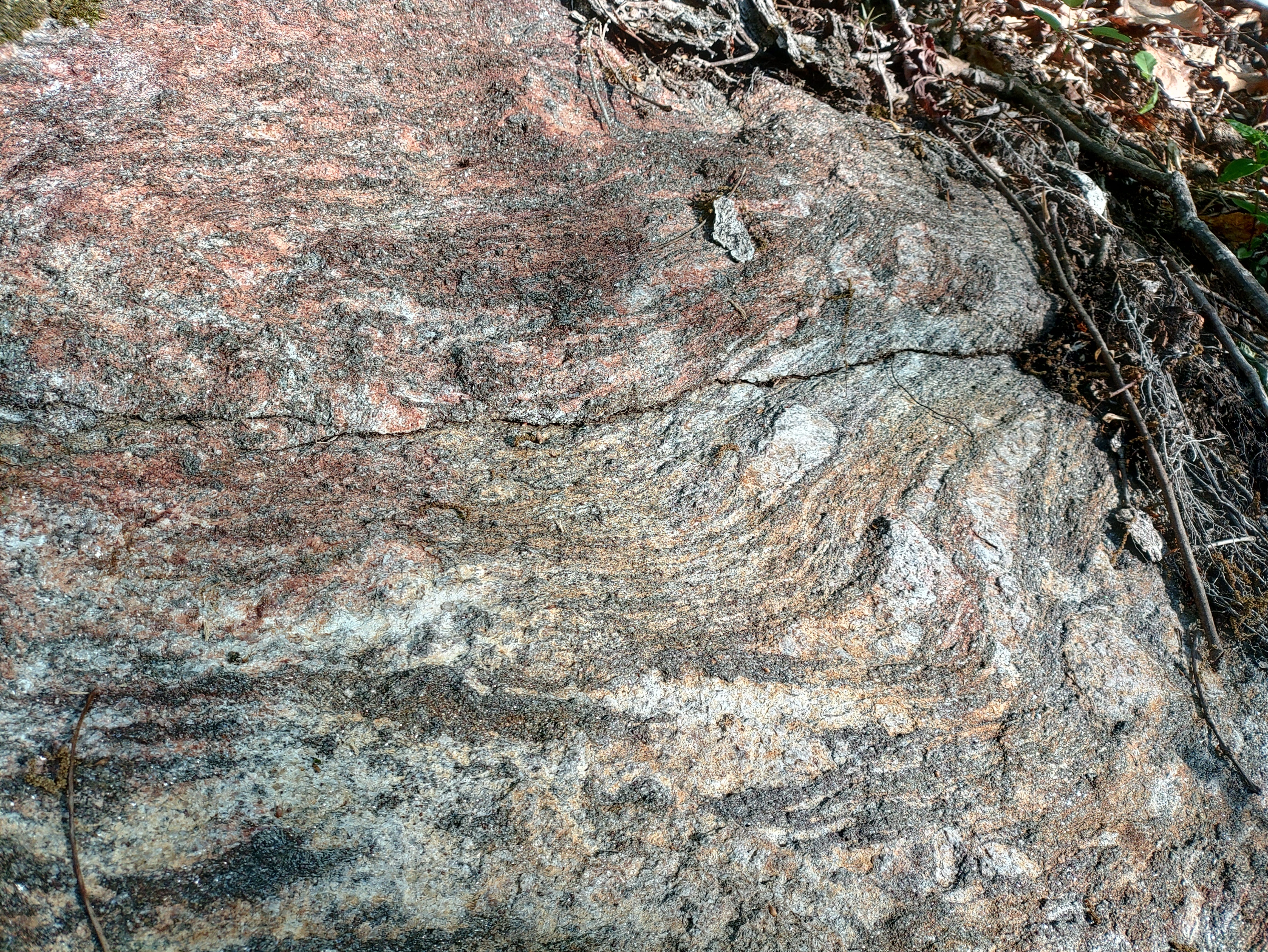
Emerging from the crack, the path contours gradually downward, below another band of smaller cliffs, and dips through a well where a tree fell in the hurricane, exposing the as-yet un-weathered, un-mossed, un-lichened swirls and patterns of stone, the crystals of garnet and quartz and mica.
Patterns in Stone
The rock in this valley is mostly gneiss (pronounced “nice”) and schist. Once upon an ancient time it was simple, layered sandstone and shale, before it underwent a metamorphosis, cooked by immense heat and pressure until minerals began to dissolve, shift, migrate, re-crystallize into infinitely variable swirls and waves and textures. Until it changed, in place, into something much more beautiful and entirely different.
Can metamorphic rock support us in our own metamorphosis? Perhaps that is a part of the magic of these mountains.
From here the path contours across a steep valley, hopping rocks above a spring below. This is one of the few places where I actually crafted a path, doing my best to discern rather than impose a pattern.
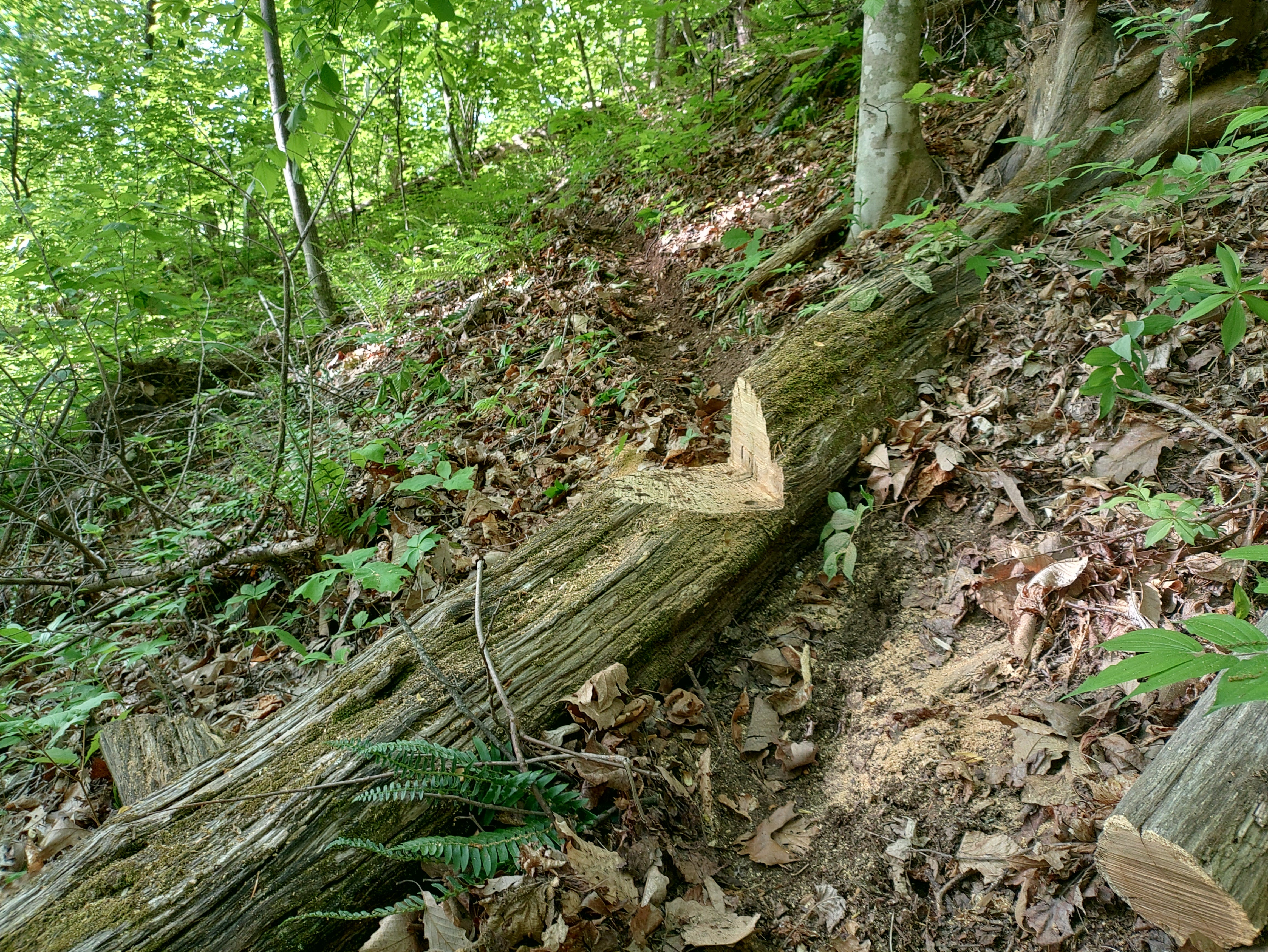
Perpetual Flow
The metamorphic bedrock of the Blue Ridge Mountains is full of deep cracks and fissures – remnants of the tectonic forces that gave birth to this land. Rain that falls on the high ridgelines seeps into these cracks and becomes a part of the mountain, working its way gradually downward to emerge as thousands of springs like this one, flowing without pause through severe drought, feeding the ceaseless tumbling waters of Mineral Creek.
The water emerging here may have fallen as rain ten years ago, or perhaps even a hundred or a thousand. It carries stories of crystal-lined crevices and traces of dissolved minerals.
At the edge of this valley is the south gate. The place where the energy of the land again shifts, where the forest begins to feel “normal” again. Where I often pick up the pace to head home, or - if I’m going the other direction - slow into a contemplative, non-goal-oriented cadence. The south gate is a large, old fallen log that I intentionally did not cut. A step into or out of the realm-within-a-realm.
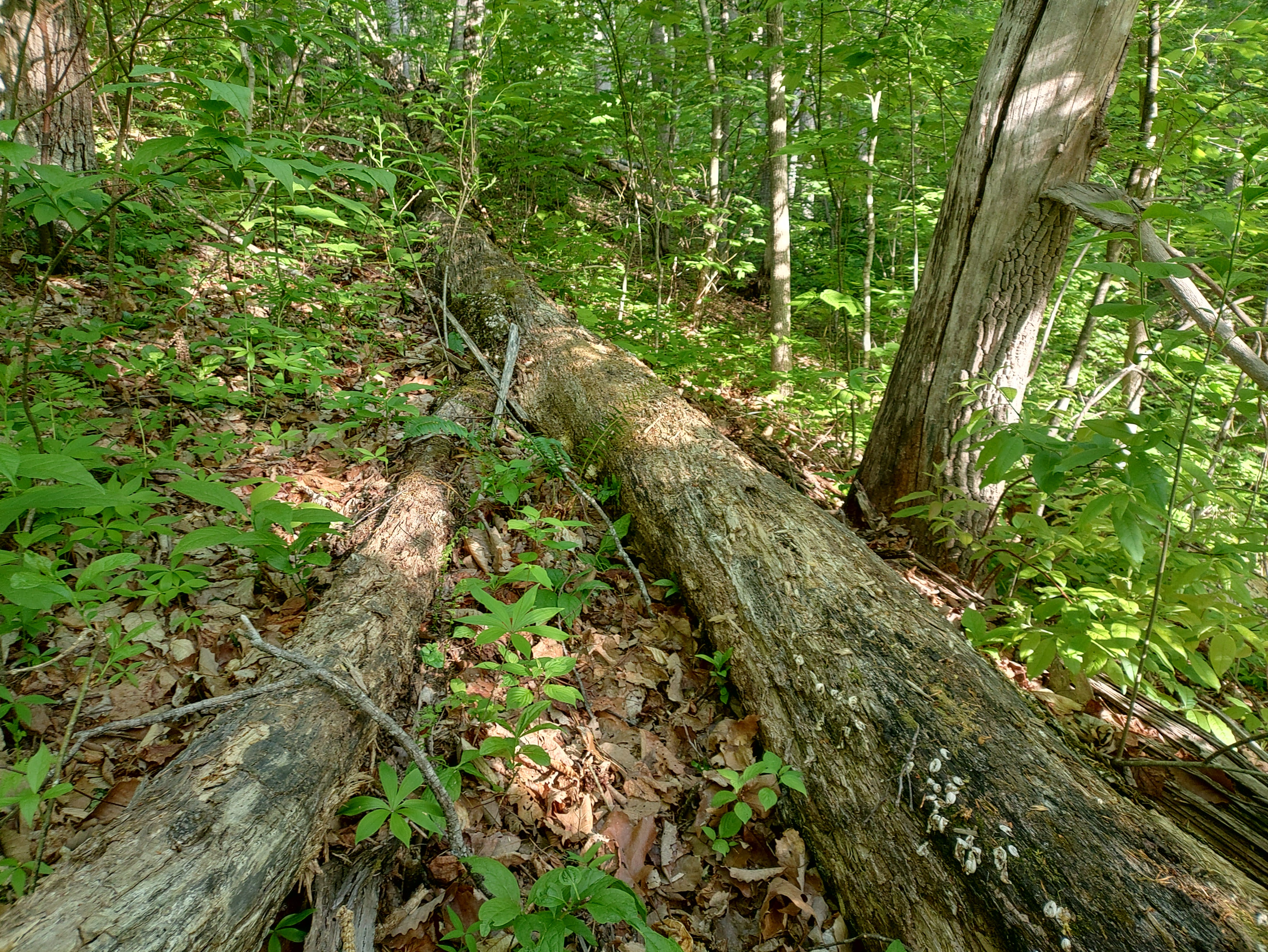
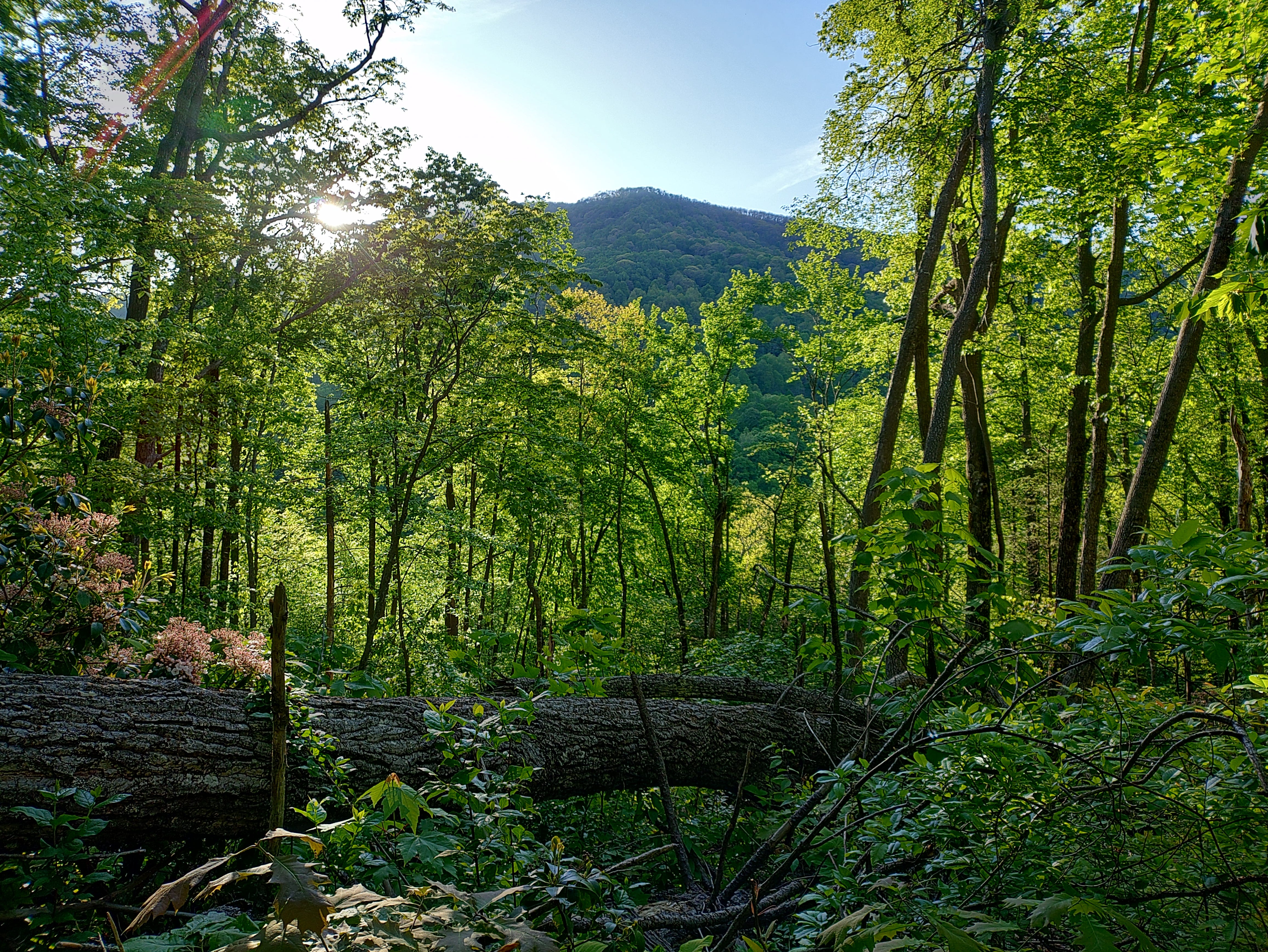
Beyond the south gate, the path descends through a large opening created by the hurricane. Most of these blowdown zones are nearly impassable, but this one had a corridor, a natural route for a trail. I tend to discern paths based on where the ground is open, where I don’t need to cut fallen trees, where I can step on the fewest trilliums and orchids.
Below the fallen trees, the path descends steeply through evergreen laurel and rhododendron - a sort of hobbit-scale forest-within-a-forest of twisted trunks and seasonal blooms. Normally I would not create a path this steep, but again there was a clear route here between dense thickets and fallen trees, a sense of where the trail wanted to be. Soon, perhaps, I will begin planting stone steps.
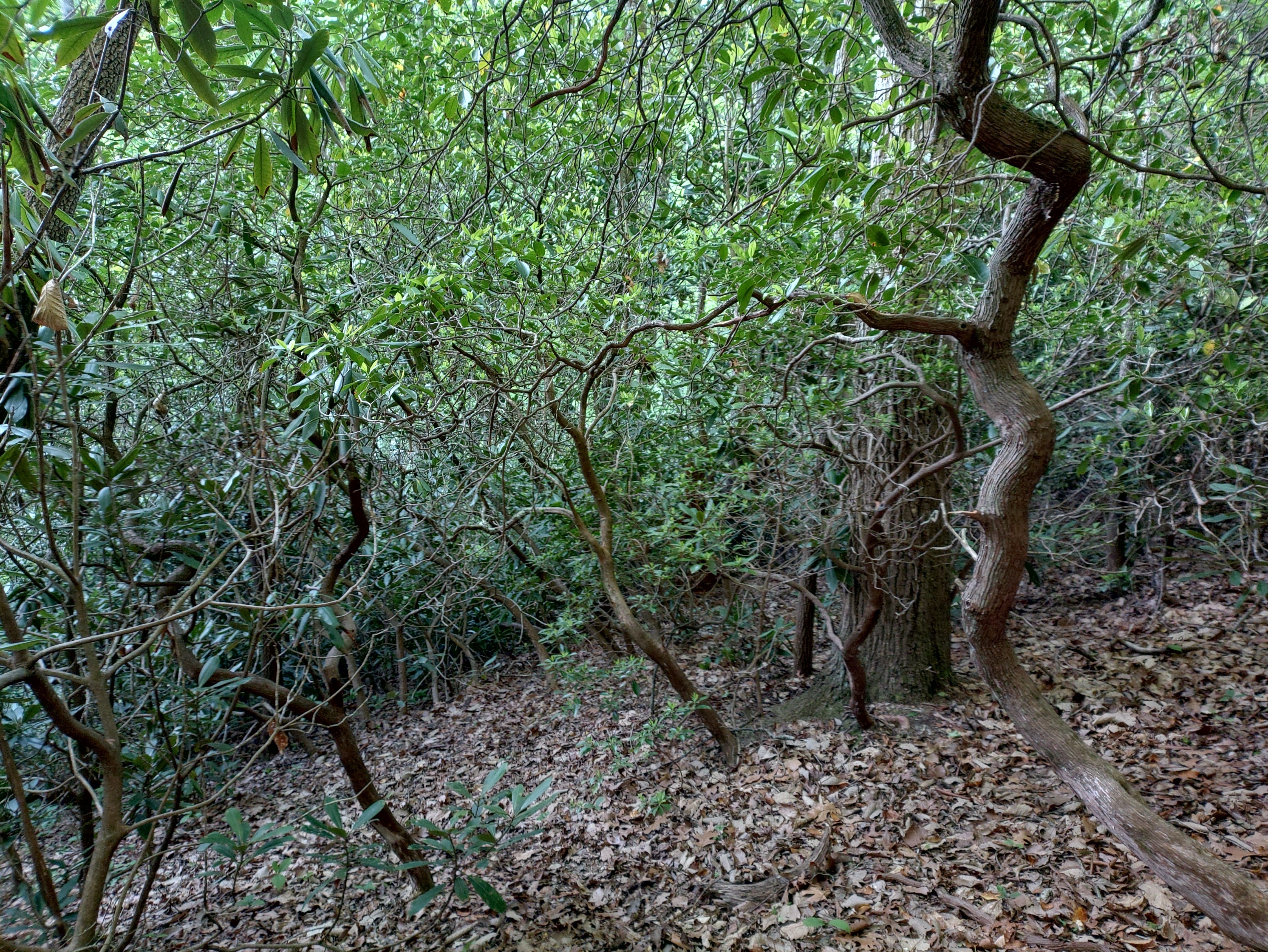
Below the rhododendron the path emerges onto the existing Waterfall Trail, which follows Hawkbill Creek downstream to its confluence with Mineral Creek, and then back to the main path just above the footbridges.
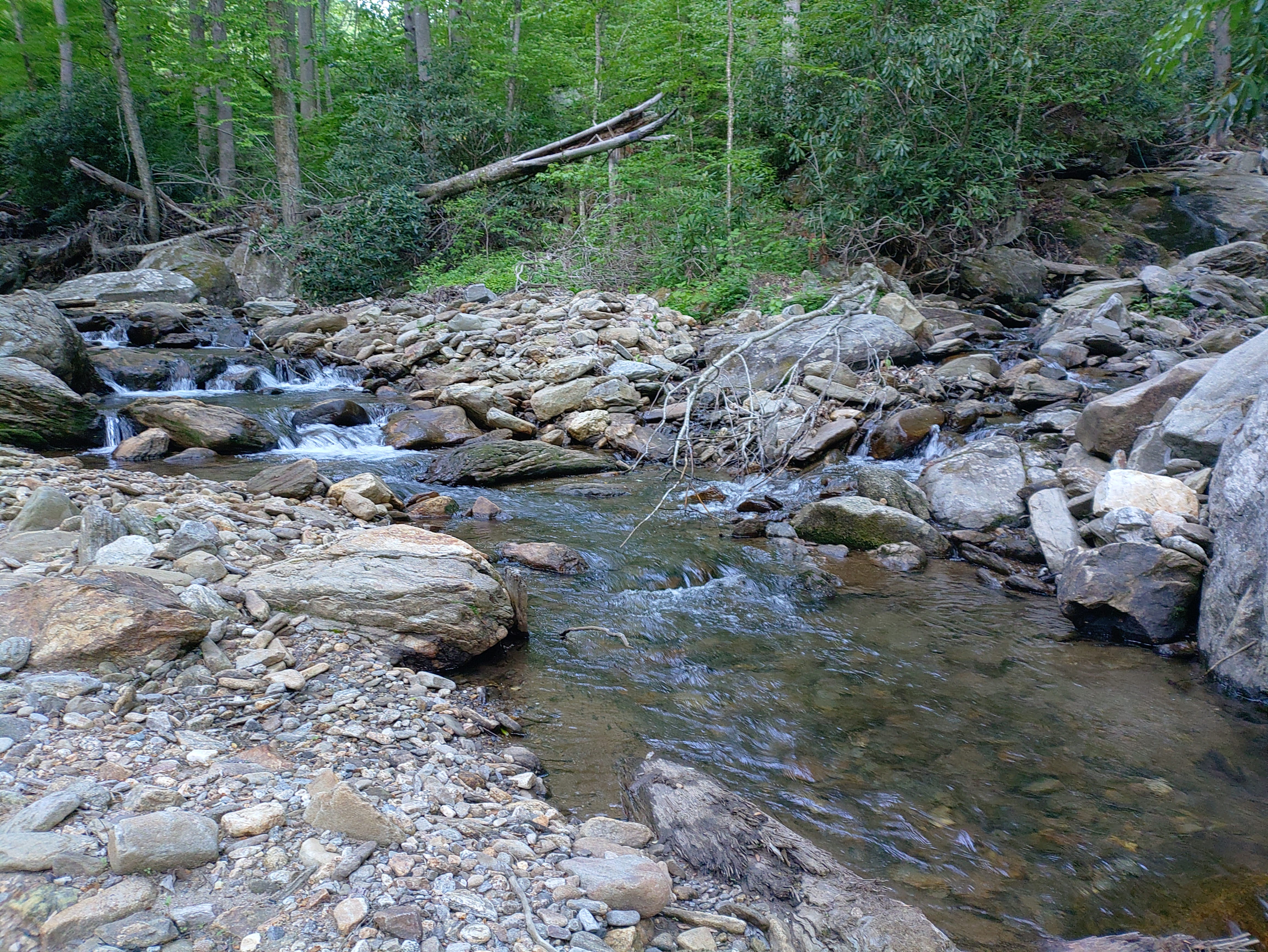
Convergence
Here Hawkbill Creek, on the right, meets Mineral Creek. Hawkbill Creek drains one-and-a-half square miles above this point, and Mineral Creek drains two-and-a-half. This is an amazing amount of flow to pour from four square miles, never dwindling through severe drought and growing only briefly after rain. Water here does not so much run off as soak in – caught in spongy soils and fractured stone – and then emerge in springs beginning in high mountain valleys.
Most of these waters have already seen at least three convergences – trickles combining to burbling flows, combining to blue lines on a map – and they will see many more. A mile downstream, Mineral Creek meets Carter Creek to become Stony Creek. A mile below that Stony Creek and Ivy Creek meet as equals and keep the Ivy name. Ivy Creek meets its other half at Forks of Ivy, before joining the French Broad River at Marshall. The French Broad joins the Holston River at Knoxville to form the Tennessee, which then collects thousands of other waters on its way to join the Ohio at Paducah, Kentucky, which very shortly thereafter joins the Mississippi at Cairo, Illinois. And the Mississippi then divides, flowing to the Gulf either down the Atchafalaya through Morgan City or along the longer route through New Orleans.
Our own paths, like rivers, wind and converge, collecting stories and experiences and wisdom. Whether we are near to the sea or – like these waters – just beginning our journey.
What has joined your path, added to your current, today?
If you are ever in this area, I invite you to walk this path with me.
And - wherever you are - I invite you to find, to create your own sacred paths. To notice the places that feel enchanted, to sense their boundaries and gates. To give yourself time, each day, to explore in presence.
Oh this is so lovely and wonderful in all the best feeling ways. What a special treat to walk alongside you through this beautiful sacred place. I can feel how much the energy shifts beyond the gates you have discovered. The spring is dear and feels so completely pure. The bear hug between tree and stone! My smile grew the more I read. I love the path you created via the notch in the log!
I like the ending contemplation, and it is something I will bring with me into this next moment after I am finished writing here. To consider myself or the flow of my life like these waters with their convergences…and to see what has joined my stream.
Happy Beltane! 🌞🌿🌸
"to stop hiking and to start visiting, wandering, belonging" :)